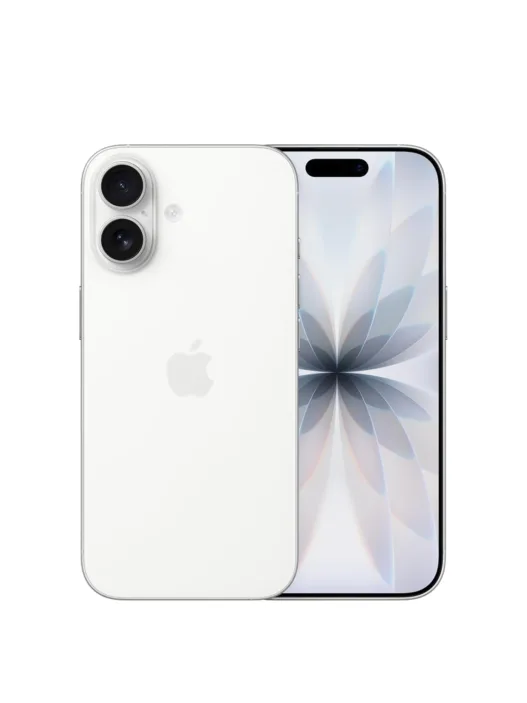






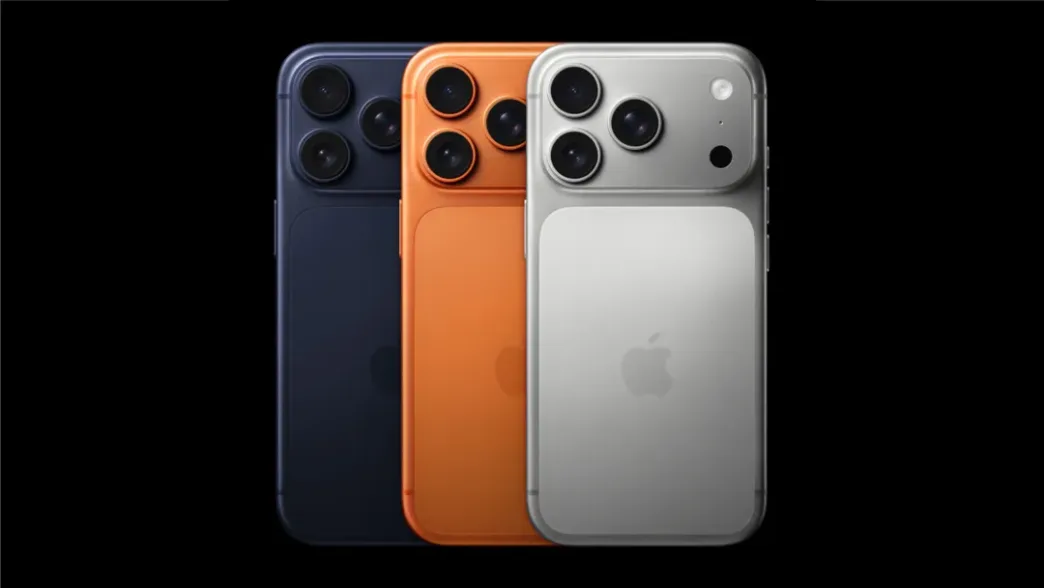
With its new generation of iPhones, Apple has taken a step forward in much-needed design that shows that mobiles still need to enter through the eyes.
Table of Contents
Weren’t all smartphones the same? Apple has just scored a Hold on to me. with the design of its new generation of smartphones, more protagonists than ever.
After a period in which iPhones had become especially predictable, or, why not say it, boring, the novelties that the firm co-founded by Steve Jobs presented on Tuesday at its jaw-dropping event finally represent a change of direction. 
The most innovative models have undoubtedly been the iPhone Air, the brand’s first ultralight, and the iPhone 17 Pro and Pro Max series of flagships.

iPhone Air beats Samsung as the world’s finest
Apple is not a brand that gets too much into the spec war against the rest, but the truth is that if it did it with the iPhone Air, it would not lack arguments.
The iPhone Air is the thinnest terminal in its catalog by far, as it is barely 5.6 millimeters thick. With this, it surpasses its main competition, the Samsung Galaxy S25 Edge, launched in May, which marks 5.8 mm in profile.
At 165 grams, it weighs two grams more than Samsung’s, so it can’t be said to be the lightest at the moment.
In turn, it is only slightly lighter than the iPhone 16e, with 167 grams, although it is also true that the iPhone Air achieves this with a screen of similar dimensions to the average, 6.5 inches, while its little brother is a compact 6.1-inch model.
Solidifies the new category of lightweight mobiles
As I said before, the iPhone Air, whose name evokes the MacBook Air family of lightweight laptops, is not the first ultra-thin flagship in the world, but together with Samsung, it already consolidates a new product category of ultralight mobiles.
With the exception of foldables, it has been years since a new smartphone form factor arrived on the market, so the Galaxy S25 Edge and the new iPhone make up a new type of device for those who want large and functional screens but thin and light designs.
Usually, many manufacturers follow in Apple’s footsteps, so it is likely that in a few months there will be many options to choose from.

The iPhone Air is expensive, yes, but not more than the competition
Like Samsung, the shorter battery life and high price become the biggest obstacles of the iPhone Air.
It will be sold from €1,219 (₹125,620 / $1,427) in Spain for its 256 GB version, reaching €1,469 (₹151,400 / $1,719) with 512 GB of storage and up to €1,719 (₹177,300 / $2,013) for its maximum configuration of 1 TB. You can read here the prices of all the products presented by Apple at its event on September 9.
It is a cost halfway between the base iPhone 17 and the iPhone 17 Pro and Pro Max, with only a €100 (₹10,310 / $117) difference with the Pro, and its arrival has meant the disappearance of the Plus models, such as the iPhone 16 Plus.
It’s a high cost, especially in countries like Spain, where it exceeds the minimum wage. But given that the Galaxy S25 Edge launched for €1,259 (₹129,800 / $1,472)—although it has already dropped to €999 (₹102,100 / $1,170) in Spain—surprisingly, Apple’s ultra-thin proposition is comparatively not more expensive than the competition.
A change that the iPhone Pro was crying out for
At the design level, Apple has managed to beat the scales in favor not only with the new iPhone Air but also with its new generation of flagships, which finally changes on the outside.
The iPhone 17 Pro and iPhone 17 Pro Max update their design for the first time after 6 generations with a look so similar that it was difficult to differentiate at first glance. It started with the iPhone 11 Pro, released in September 2019.
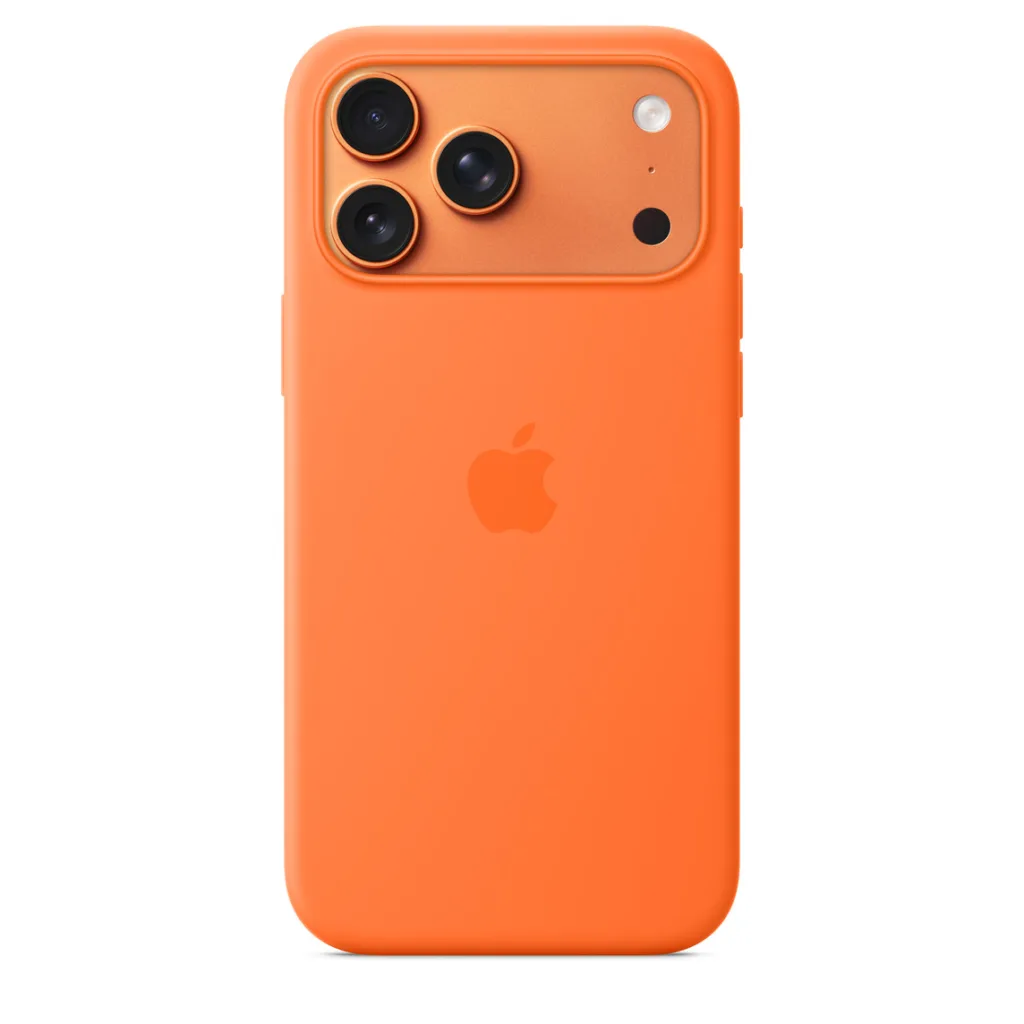
Like the iPhone Air, Apple’s new high-end phones have a unibody back, that is, in a single piece, with a curve that raises the top and creates a rectangular module with curved edges that houses the triple rear camera. Despite this, the lenses stand out a little from the rest and still have the characteristic triangular arrangement.
On the right side of the module, the iPhone 17 Pro Max and its little brother house the flashlight and an additional sensor to make the whole thing symmetrical. In the rest, it maintains elements such as the flat metal edges and the straight screen as well, waiting to see if the waterfall finally arrives next year or in 2027 as rumored.
The colors change this year as well, with 3 options (silver, orange, and dark blue) that differ quite a bit from the metallic tones of the iPhone 16 Pro series, especially in the case of the cosmic orange tone, which evokes recent products such as the iMac with M4.
It is true that it is not as radical a change as what happened with the iPhone X in 2017, but it is the first time that just with a glance you will clearly notice the difference between one year and another in more than five years, something that will also accompany iOS 26 with the Liquid Glass design at the software level. also renewed.
It remains to be seen if this increases sales, although Apple is already a leader, and I think it is good news without a doubt.
Be a part of over Success!
- Stay ahead of the curve with the latest tech trends, gadgets, and innovations! 🚀🔗Newsletter
- Follow me on Medium for more insights ⭐
- ✍️ Write for Us on Technoluting (Medium)
- 💬 Share your feedback or connect with me on LinkedIn — I’d love to hear from you!