





In a digital environment dominated by content creators, each platform is trying to reconfigure its role. It is no longer enough to be a showcase: now it is a matter of building community, fostering loyalties, and opening direct communication channels between those who generate content and those who consume it. In that game, Facebook has been losing ground for years. But its latest move points to a change of course, with new features designed to tighten the bond between creators and fans, from welcome to everyday interaction.
The axis of these new features is called Fan Hub, a space within the creator’s profile that highlights the most active followers. There, fans can access exclusive content, see their prioritized comments, and even appear on visible lists that reward their loyalty. For the creator, a more segmented communication channel is opened, with the possibility of activating specific dynamics for their most engaged core. A clear attempt to turn the one-way relationship into something more participatory and tangible.
Another interesting new feature is the welcome feed for new followers. It is a section designed for those who have just joined a creator’s community and which shows them publications selected by the latter: a kind of digital letter of introduction, which facilitates connection from the first moment. Instead of letting the algorithm decide what to watch, the creator can guide that first experience, showing what they consider most representative or engaging of their content. 
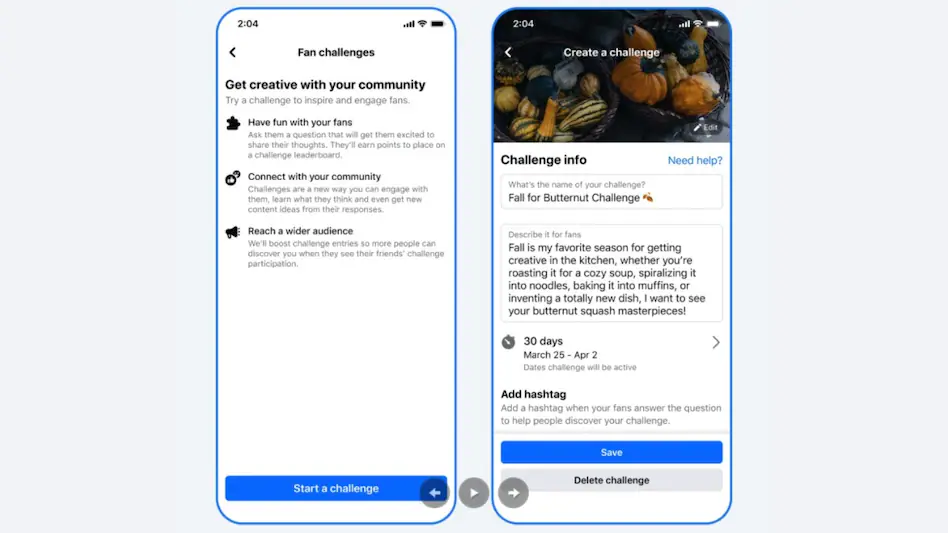
Interaction is also gaining ground with tools such as surveys, open-ended questions, and automatic thank you messages for new followers. These are simple options, but they multiply the possibilities of establishing a conversation or generating involvement without saturating the creator. Facebook thus seeks to balance closeness with control, avoiding the noise that is often generated by excessive openness without filters.
Behind these decisions there is a clear reading: the relationship between creators and community cannot continue to depend solely on the algorithmic feed. Facebook wants to give more control to those who generate content so that they can design their own dynamics without depending exclusively on the performance of their publications. In this model, each creator becomes an active manager of their audience, with tools that aim more at personalization than volume.
Movement is also a response to what is happening outside its ecosystem. TikTok has conquered momentum and virality, YouTube maintains its editorial dominance, and even Instagram—within the same business group—has managed to position itself as the channel of direct image. Facebook, on the other hand, has been left as a secondary platform for many creators, especially the younger ones. With these new features, it tries to regain prominence as a space of community and depth, beyond the simple occasional publication.
It remains to be seen if it arrives in time. The new features are interesting and, in some cases, more comprehensive than those of its rivals. But the key will not only be in the tool but also in how Facebook manages to reconnect with those who have already left or who, directly, never considered the network as a platform to create community. Fan Hub and the company are pointing in the right direction. Now it remains to be seen if anyone is still willing to walk that path.